
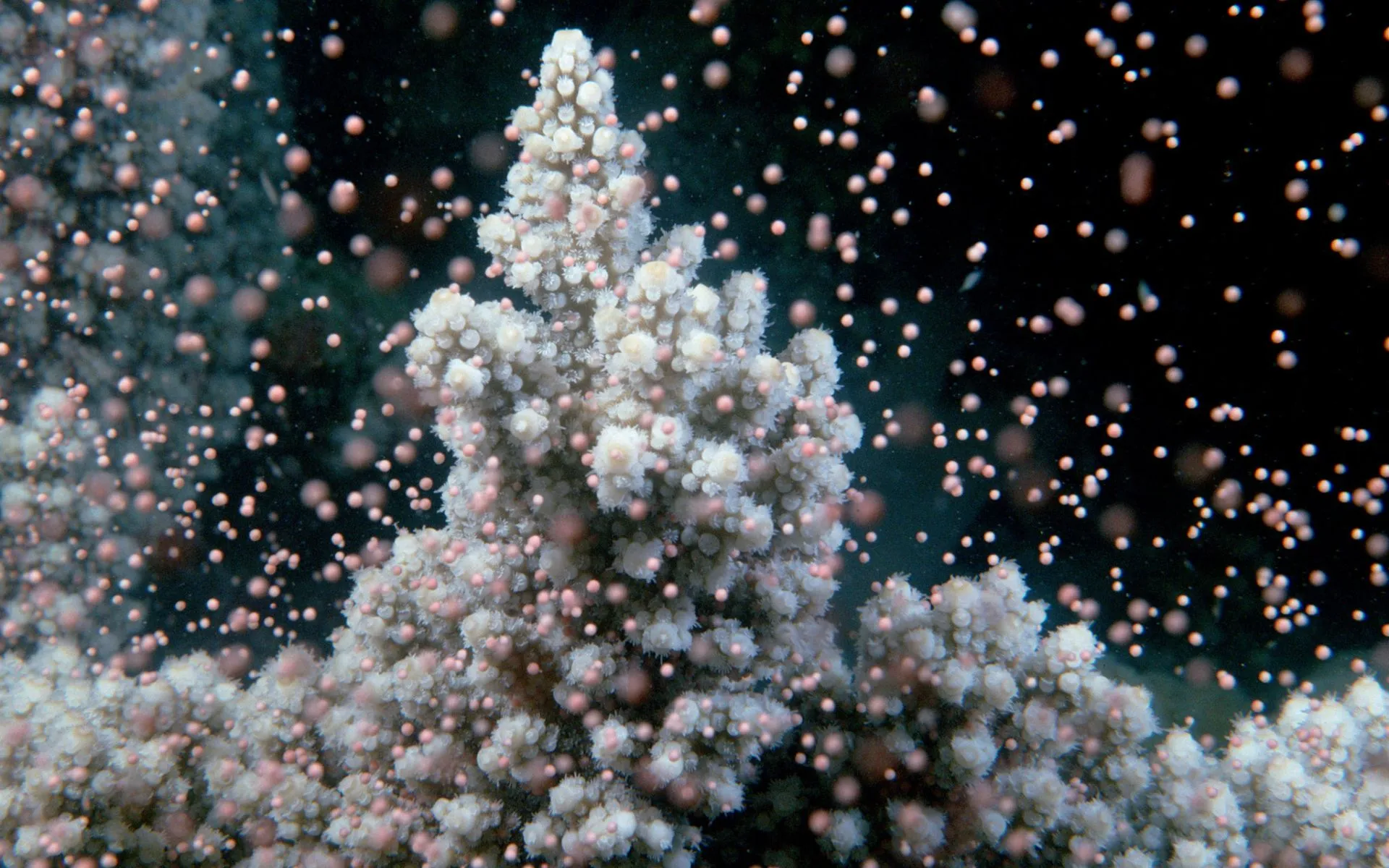
Coral reefs may look still and silent, but once a year they perform one of the most impressive natural events on the planet: mass spawning. During this short window, thousands of coral colonies release eggs and sperm into the water at the same time, creating an underwater “snowstorm” that fuels the next generation of reefs.
For the general public, coral reproduction often feels mysterious. This article breaks it down in simple terms — no scientific background required.
How Do Corals Know When to Spawn?
Corals don’t have eyes or brains, yet they synchronize spawning with incredible precision. They rely on natural cues:
- The moon — most species spawn a few days after a full moon.
- Water temperature — spawning usually happens during warm, stable seasons.
- Day length — seasonal sunlight changes help corals “tell the time.”
When all these signals align, entire reefs release their gametes within minutes of each other — a strategy that increases the chances of fertilization.
What Happens After Spawning?
Once eggs and sperm meet, they form tiny coral embryos. These develop into coral larvae, also called planulae. At this stage, they are:
- smaller than a grain of sand,
- able to swim using tiny hair‑like structures,
- drifting with currents for days or weeks.
Most larvae won’t survive — they are eaten, damaged, or drift too far. But the survivors eventually settle on a hard surface, attach themselves, and begin forming a new coral colony.
How Baby Corals Choose Where to Settle
Coral larvae are surprisingly picky. They prefer:
- clean, stable surfaces,
- areas with crustose coralline algae (a pinkish algae that signals “good habitat”),
- places with low sediment and good water flow.
If conditions are right, the larva transforms into a tiny polyp — the first building block of a coral colony.
Fun Facts About Coral Babies
- Some coral species release millions of eggs in a single spawning event.
- Coral larvae can detect chemical signals that guide them to healthy reefs.
- Some corals reproduce both sexually (spawning) and asexually (fragmentation).
- Coral larvae glow under UV light, helping scientists track them during research.
Why Coral Reproduction Matters for Reef Survival
Coral spawning is essential for reef recovery. Natural reproduction:
- increases genetic diversity,
- helps reefs adapt to warming oceans,
- creates new colonies in damaged areas,
- supports long‑term ecosystem resilience.
At Indo Coral Conservation, we monitor spawning events and support larval settlement through restoration projects. While we cannot replace nature, we can help give new corals a better chance to survive.
Key Takeaways
- Corals synchronize spawning using the moon, temperature, and seasonal cues.
- Coral larvae drift, swim, and eventually settle to form new colonies.
- Only a small percentage survive — making reproduction a fragile process.
- Healthy spawning is essential for reef recovery and long‑term resilience.
Coral reproduction is one of nature’s most impressive events. Understanding it helps us appreciate how delicate — and how extraordinary — coral reefs truly are.
This article is for educational purposes and reflects Indo Coral Conservation’s commitment to accessible, factual marine science communication.