
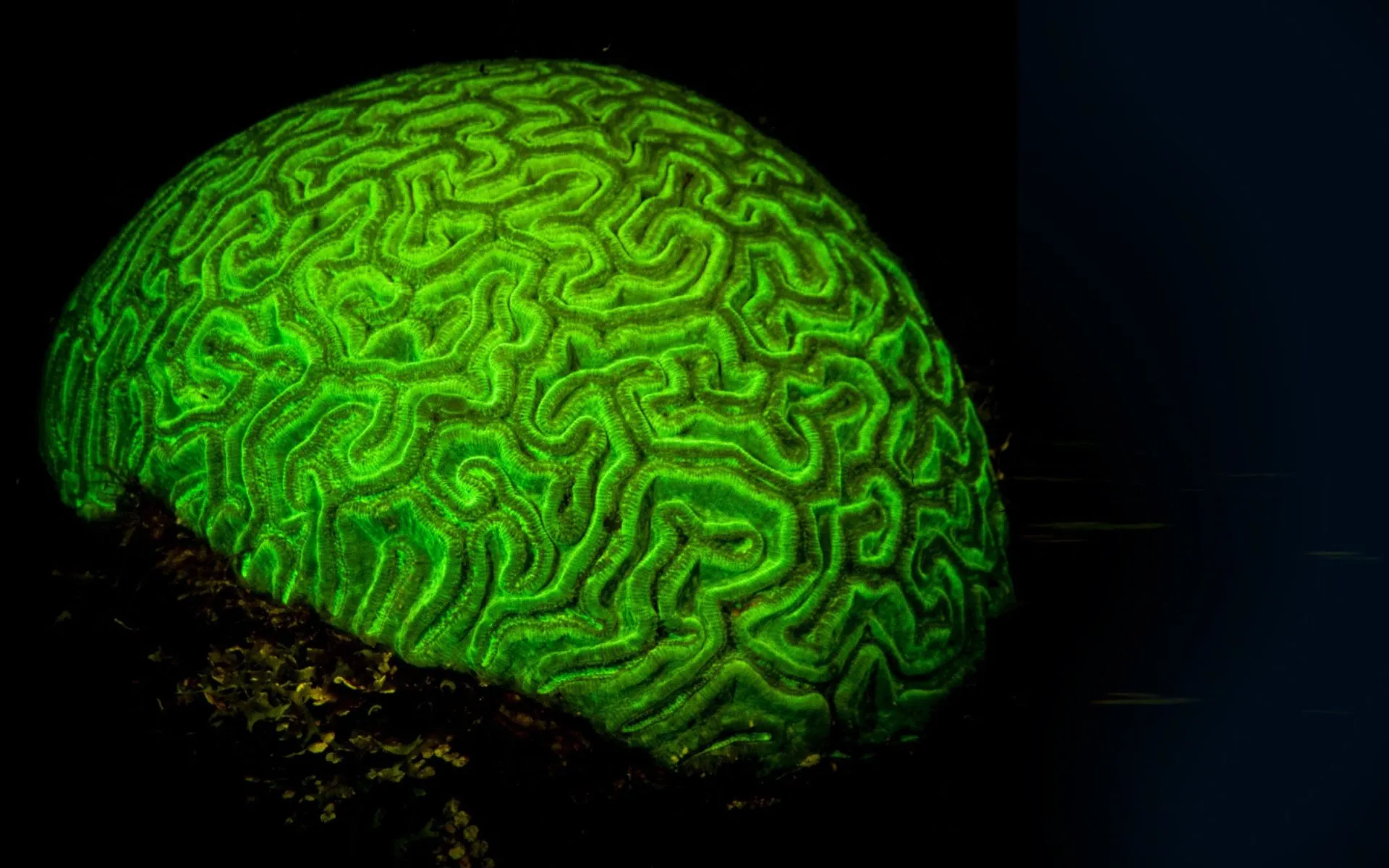
If you’ve ever seen corals glowing green, red, or blue under a UV torch, you’ve witnessed one of the most fascinating natural phenomena in the ocean: biofluorescence. This glow is not magic — it’s science. And it tells us a lot about how corals survive, communicate, and respond to stress.
What Exactly Is Biofluorescence?
Biofluorescence happens when an organism absorbs high‑energy light (usually blue or UV) and re‑emits it as a different color. Corals produce special fluorescent proteins that create this effect. These proteins are found in the coral’s tissue, not in the skeleton.
Under normal sunlight, the glow is invisible. But at night, with the right light source, the reef transforms into a neon landscape.
Why Do Corals Glow?
Scientists are still studying the exact reasons, but several theories are supported by research:
- Protection from sunlight: fluorescent proteins may act like sunscreen, reducing UV damage.
- Stress response: some corals glow brighter when stressed, especially during bleaching events.
- Communication: certain fish and marine species can see fluorescence and may use it for signaling.
- Photosynthesis support: fluorescence may help scatter light to the coral’s symbiotic algae.
None of these explanations are definitive. Coral fluorescence is still an active area of research, and every year we learn more.
Cool Facts About Glowing Corals
- Some coral species produce over six different fluorescent proteins.
- Fluorescence can help scientists identify coral stress before bleaching becomes visible.
- Certain fish, like lizardfish and wrasses, can naturally see fluorescence — humans need special lights.
- Fluorescent proteins from corals are used in medical research, including cancer detection.
What Biofluorescence Tells Us About Reef Health
Biofluorescence is one of the easiest ways to spark curiosity about marine science. People who see glowing corals for the first time often ask:
- “Why do they glow?”
- “Is it dangerous?”
- “Does it mean the coral is healthy?”
These questions open the door to deeper conversations about reef conservation, climate change, and the importance of protecting marine ecosystems.
Key Takeaways
- Biofluorescence is caused by natural fluorescent proteins in coral tissue.
- Corals may glow for protection, communication, or stress response.
- Fluorescence helps scientists monitor coral health without disturbing the reef.
- Night dives with UV lights reveal a hidden world most people never see.
Coral fluorescence is more than a visual spectacle — it’s a reminder of how complex and fragile these ecosystems are. The more we understand them, the better we can protect them.
This article is for educational purposes and reflects Indo Coral Conservation’s commitment to factual, accessible marine science communication.