
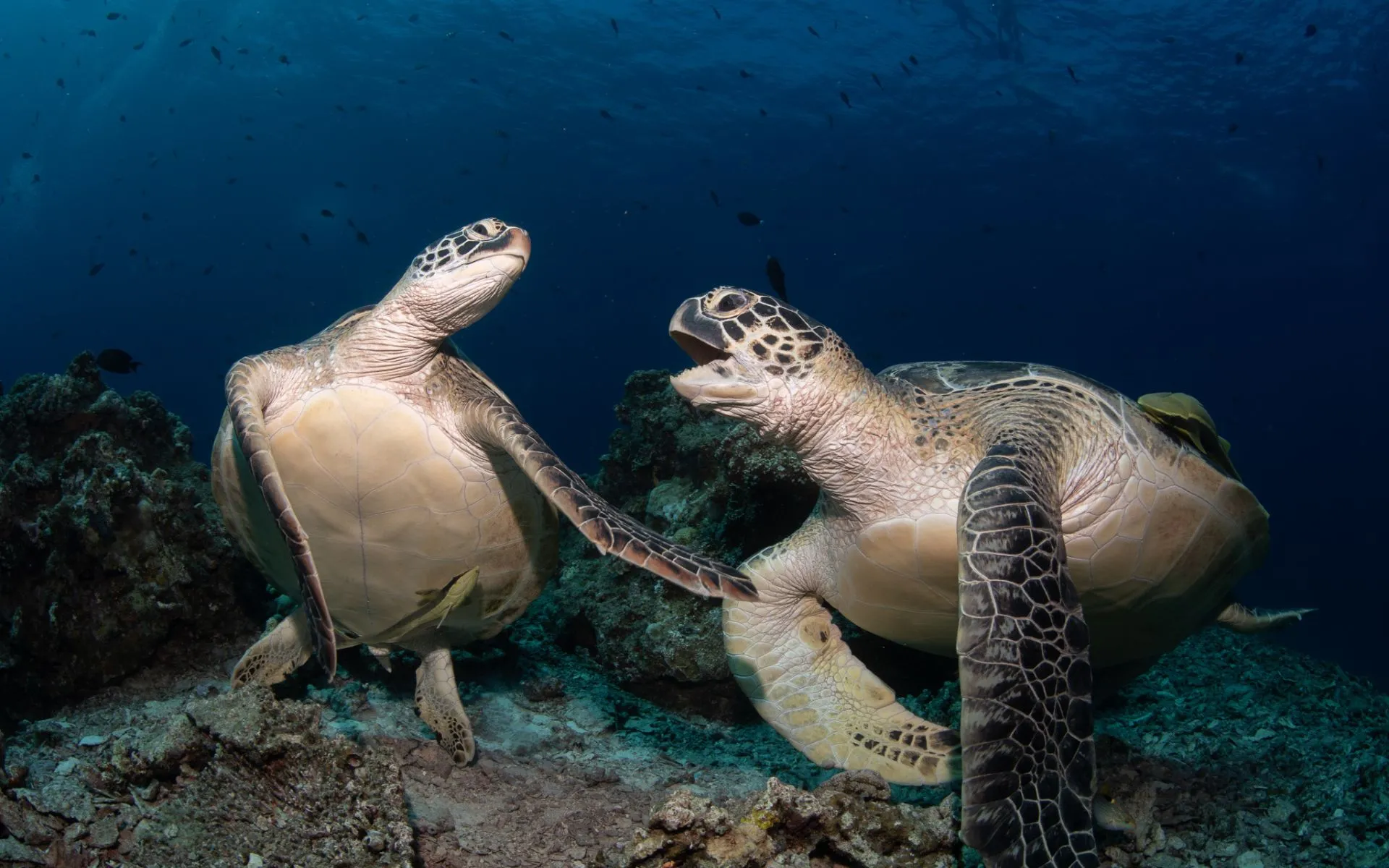
Sea turtles are among the most iconic animals in the ocean, and for many visitors, meeting one is the highlight of their trip. What most people don’t realize is that turtles are not all the same — they have individual personalities, preferences, and habits that become obvious when you observe them regularly.
At Indo Coral Conservation, we encounter turtles almost every day. Over time, patterns emerge that show just how complex and interesting these animals really are.
Yes, Turtles Really Do Have Personalities
While turtles don’t express emotions the way mammals do, they show consistent behavior traits. Some are bold, some cautious, some curious, and some completely uninterested in humans.
Here are a few personality types we commonly see:
- The Curious One — swims directly toward snorkelers, often circling slowly.
- The Relaxed Sleeper — found napping under the same coral block every day.
- The Busy Grazer — focused entirely on feeding, ignoring everything else.
- The Shy Drifter — keeps distance and leaves if approached too closely.
These patterns repeat over weeks or months, showing that turtles are far from “simple” animals.
Why Turtles Sometimes Approach Snorkelers
Many visitors are surprised when a turtle swims straight toward them. This behavior is natural and can be explained by a few factors:
- Curiosity — turtles investigate slow, calm movements.
- Habituation — in popular snorkeling areas, turtles are used to humans.
- Cleaning stations — turtles may be heading to a familiar spot and pass close by.
- Air access — sometimes they simply need to reach the surface.
These encounters feel magical, but they are not signs of domestication. Turtles remain wild animals and deserve respectful distance.
Where Turtles Spend Their Time
Turtles follow daily routines. They often return to the same:
- feeding areas,
- resting spots,
- cleaning stations,
- surfacing routes.
Green turtles, for example, may sleep for up to seven hours underwater, usually tucked under a coral ledge or inside a sheltered sandy patch.
Fun Facts About Sea Turtles
- Turtles can hold their breath for several hours when resting.
- Each turtle has a unique pattern on its shell — like a fingerprint.
- Green turtles are named for the color of their fat, not their shell.
- Some turtles migrate thousands of kilometers between feeding and nesting grounds.
How Snorkelers Can Respect Turtle Behavior
Understanding turtle behavior helps visitors interact responsibly. We always remind snorkelers to:
- keep a respectful distance,
- avoid blocking a turtle’s path to the surface,
- stay calm and move slowly,
- never touch or chase turtles.
These simple actions reduce stress and allow turtles to continue their natural routines.
Key Takeaways
- Sea turtles show consistent behavior patterns that resemble personalities.
- Curiosity, habituation, and natural routines explain why turtles approach snorkelers.
- Turtles rely on specific feeding, resting, and cleaning areas.
- Respectful behavior from snorkelers helps protect these vulnerable animals.
The more we observe turtles, the more we appreciate how unique each individual is. Protecting them starts with understanding their behavior — and giving them the space they deserve.
This article is for educational purposes and reflects Indo Coral Conservation’s commitment to factual, accessible marine science communication.