
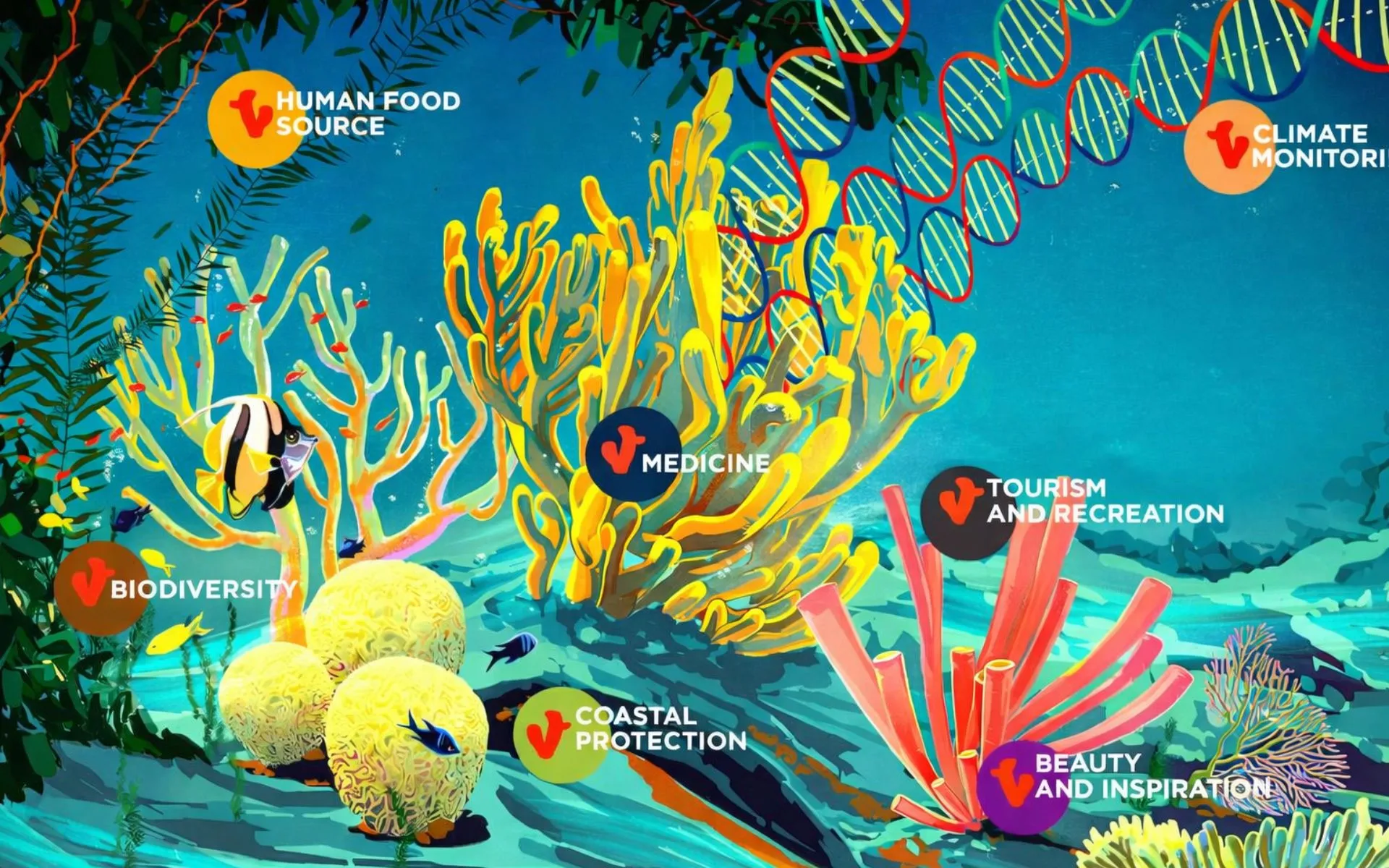
Coral reefs are often seen as a destination for divers and snorkelers, but their importance goes far beyond tourism. Even if you never put your head underwater, coral reefs still protect your coastline, support your food supply, and contribute to medical research. They are one of the most valuable ecosystems on Earth — and also one of the most threatened.
This article explains why reefs matter to everyone, not just ocean lovers.
Reefs Protect Coastlines From Waves and Storms
Coral reefs act as natural breakwaters. Their complex structures absorb wave energy before it reaches the shore.
- Healthy reefs can reduce wave energy by up to 97%.
- They protect beaches from erosion.
- They reduce the impact of storms and rising sea levels.
Without reefs, many tropical coastlines — including parts of Indonesia — would face far more flooding and damage during storms.
Reefs Support Food Security for Millions
Coral reefs are essential for global fisheries. They provide habitat, shelter, and feeding grounds for thousands of species.
- Over 1 billion people rely on reef fish as a primary protein source.
- Reefs support small‑scale fisheries that sustain local communities.
- Many commercial fish species spend part of their life cycle on reefs.
When reefs decline, fish populations decline — and so does food security.
Reefs Contribute to Medicine and Scientific Research
Coral reefs are a source of unique chemical compounds that scientists use to develop new medicines.
- Coral compounds are used in cancer research.
- Some reef organisms produce natural anti‑inflammatory substances.
- Marine sponges have contributed to antiviral and antibacterial treatments.
Every time a reef disappears, we lose potential medical discoveries.
Reefs Support Tourism and Local Economies
Millions of people travel to tropical destinations to experience coral reefs. This tourism supports jobs, businesses, and entire communities.
- Snorkeling and diving generate billions of dollars globally.
- Healthy reefs attract more visitors and create sustainable income.
- Local guides, boat crews, restaurants, and hotels all benefit.
When reefs degrade, tourism declines — and so does local revenue.
Reefs Are Biodiversity Hotspots
Coral reefs cover less than 1% of the ocean but host around 25% of all marine species. They are home to fish, sharks, turtles, crustaceans, mollusks, and countless microscopic organisms.
This biodiversity is essential for ecosystem stability, resilience, and long‑term survival.
Fun Facts About Coral Reefs
- Some reefs are over 8,000 years old.
- Reefs support more species per square meter than rainforests.
- Parrotfish help create tropical beaches by producing sand.
- Corals are animals, not plants — and they can glow under UV light.
Why Reef Protection Matters Now
Coral reefs are under pressure from warming oceans, pollution, overfishing, and coastal development. Without action, many reefs could disappear within our lifetime.
At Indo Coral Conservation, we work to restore damaged reefs, monitor reef health, and educate the public about the importance of marine ecosystems. Protecting reefs is not just about saving nature — it’s about protecting people.
Key Takeaways
- Coral reefs protect coastlines from erosion and storms.
- They support food security for millions of people.
- Reefs contribute to medical research and scientific discovery.
- They drive tourism and support local economies.
- Reefs are biodiversity hotspots essential for ocean health.
Even if you never dive, coral reefs still protect your world. Their survival is directly connected to ours.
This article is for educational purposes and reflects Indo Coral Conservation’s commitment to factual, accessible marine science communication.