Skip to content

Gili Matra Marine National Park
Gili Air Island & North Lombok

Marine Ecology Diver Courses

Three marine ecology courses, created by Indo Coral Conservation for certified divers, each including an SSI specialty certification, but built on more than the standard SSI syllabus.
SSI Certified

SSI Certification

icon-conservation-focus

Real fieldwork,
not just theory

icon-lead-marine-biologist-indocoral

Taught by
marine biologists

icon-kid-friendly-indocoral

Ages 15+

Dive programs

Choose from
3 programs

Programs

Choose your focus.

Created and taught by our own marine biologists, each course is built around real fieldwork that goes far beyond standard SSI content. The certification you’ll earn is a bonus, not the point.
Coral Ecology Diver Course
Coral Ecology Diver
3 DAYS
Certified divers only
SSI certification included

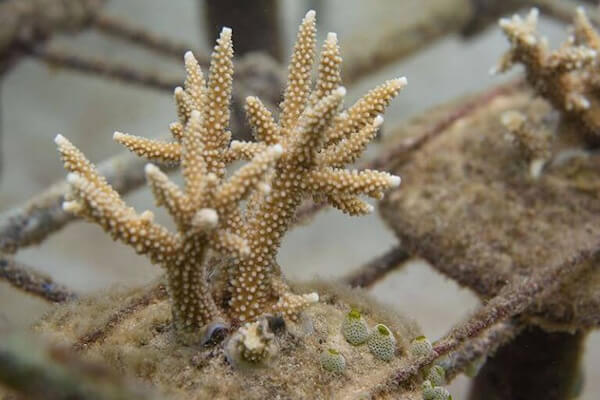
A deep, hands-on introduction to coral ecosystems, from field identification to hands-on coral farming and restoration.

IDR 3,600,000
Includes: 4 boat dives, dive equipment, academic materials, SSI Coral Identification certification

SCHEDULE

Day 1: Coral Basics & First Dive

  • Theory: hard vs. soft corals, SPS, LPS
  • Dive 1: field ID of hard, soft & small polyp corals

Day 2: Coral Diversity

  • Dive 2: large polyp coral
  • Dive 3: soft coral genera

Day 3: Coral Farming & Global Reefs

  • Theory: coral farming
  • Dive 4: micro-fragmentation & replanting
  • Final exam
  • SSI certification awarded
sea-turtle-diver
Sea Turtle Ecology Diver
2 DAYS
Certified divers only
SSI certification included

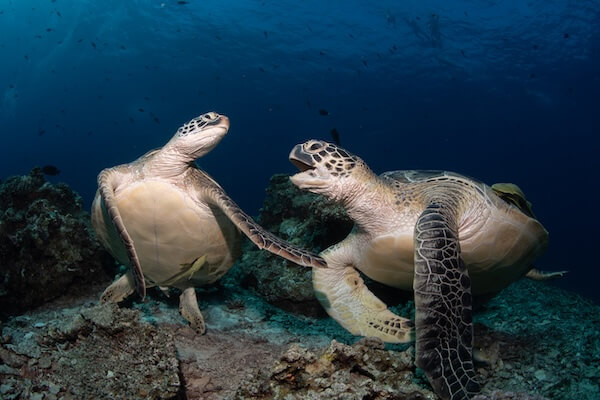
Learn to identify individual sea turtles by their markings, then track them through real photo-ID monitoring dives.

IDR 2,200,000
Includes: 2 boat dives, dive equipment, academic materials, SSI Sea Turtle Ecology certification

SCHEDULE

Day 1: Sea Turtle Basics & First Dive

  • Theory: evolution, adaptations & identification
  • Dive 1: species & sex ID

Day 2: Sea Turtle Monitoring

  • Theory: ecology, life cycle & conservation
  • Dive 2: photo-ID monitoring & data collection
  • Debrief + discussion · SSI certification awarded
Reef Fish Ecology Diver Course
Reef Fish Ecology Diver
2 DAYS
Certified divers only
SSI certification included

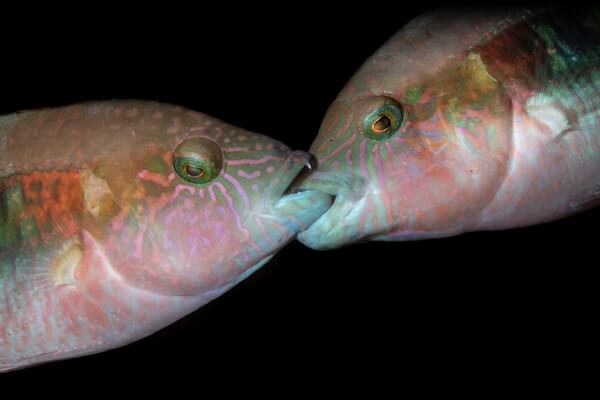
Master reef fish identification and the scientific survey methods marine biologists use to monitor indicator species.

IDR 2,200,000
Includes: 2 boat dives, dive equipment, academic materials, SSI Fish Identification certification

SCHEDULE

Day 1: Reef Fish Basics & First Dive

  • Theory: fish identification & major families
  • Dive 1: reef fish ID

Day 2: Reef Fish Indicators & Monitoring

  • Theory: advanced reef fish ecology & conservation principles
  • Dive 2: scientific monitoring of indicator fish species
  • Debrief & discussion
  • SSI certification awarded
coral-diver-course-intro-and-prerequisites

Requirements

Before you dive in.

One set of prerequisites covers all three courses.
  • Minimum Age: 15 years
  • Certification: Open Water Diver (or equivalent)
  • Experience: Minimum 20 logged dives
  • Recent Activity: Must have dived within the past 12 months
If you need a scuba skills update or additional dives before joining, visit our partner 3W Dive Center for tailored support.
Beyond the Basics

Why choose these courses?

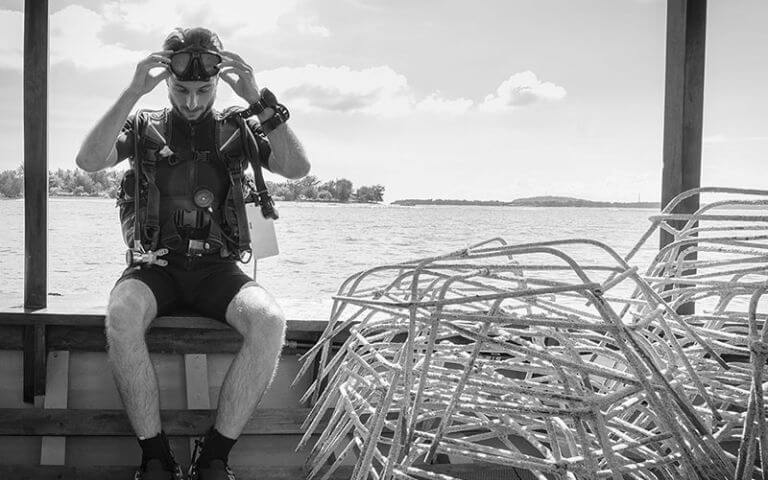
The real value is in the depth of learning and field experience. Each course is an introduction to real marine science, made for divers who want more than just the basics.

You’ll spend your time in the water doing the work: identifying species, tracking individual animals and learning the survey methods researchers use.

Your course fee also supports our coral farming and community work.
coral-diver-course-why-choose-this-course
Questions

What you need to know.

Do I need to be a certified diver to take these courses?
Yes. All three are Indo Coral’s own in-depth courses for certified divers, each also awarding an SSI specialty certification: you need an Open Water Diver certification (or equivalent), at least 20 logged dives, and a dive within the past 12 months. If you’re short on dives or need a refresher, our partner 3W Dive Center can get you ready first.
Coral Diver (3 days, 4 boat dives) focuses on coral identification and restoration, with SSI Coral Identification certification. Sea Turtle Ecology Diver (2 days, 2 boat dives) covers sea turtle identification and monitoring, with SSI Sea Turtle Ecology certification. Reef Fish Ecology Diver (2 days, 2 boat dives) covers reef fish identification and monitoring, with SSI Fish Identification certification. Each is a standalone course so you can take one, two, or all three.

All courses include boat dives, dive equipment, academic materials, and the SSI certification for that course.

Yes. These courses are a great stepping stone into our longer Marine Conservation Internship programs, which go even deeper into the same subjects with multi-week fieldwork.
No, accommodation and meals aren’t included but there are many budget-friendly options available. See our full FAQ for travel and accommodation tips.
Contact us by WhatsApp, phone, or our contact form, and we’ll help you pick the right course and date. We’re reachable 9am–6pm (GMT+8).
Book now

Let’s get you in the water.

Reach out to us directly, or come find us on Gili Air.

whatsapp-logo-white-bg.png
+62 (0) 815 7202 2776
contact-email-icon-WG1.jpg
contact@indocoral.org
address_flat-WG-1.jpg
Gili Air Island
×
What is BRUV – Baited Remote Underwater Video method?

A camera is placed on the seafloor with bait positioned in front. It records fish that come to investigate over a set time. Footage is reviewed later to identify species and behavior. It’s a passive method like setting a camera trap for marine life.

In short: BRUV = film fish attracted to bait, then analyze the video later.

×
Booking enquiry

Coral Ecology Diver Course

Fill in your details and our team will get back to you as soon as possible.
First Name *
Last Name *
Email Address *
Preferred Date *
Number of Divers *
Additional Comments
×
Booking enquiry

Sea Turtle Diver Course

Fill in your details and our team will get back to you as soon as possible.
First Name *
Last Name *
Email Address *
Preferred Date *
Number of Divers *
Additional Comments
×
Booking enquiry

Reef Fish Diver Course

Fill in your details and our team will get back to you as soon as possible.
First Name *
Last Name *
Email Address *
Preferred Date *
Number of Divers *
Additional Comments
×
What is UVC – Underwater Visual Census method?

Divers swim along a transect line and visually record all fish seen within a defined area. They note species, size, and numbers during the dive. It’s a live fish count. Like taking attendance in a moving classroom.

In short: UVC = spot and count fish by eye while swimming the transect.

×
What is Belt Transect method?

A measuring tape is laid out along the reef. In our case divers count all visible invertebrates (e.g. sea cucumbers, starfish) within a set belt width usually 1 or 2 meters. They record species and numbers while swimming slowly along the line. It’s a wide-area visual count like sweeping a corridor for invertebrates.

In short: Belt = count all invertebrates within a set zone along the tape.

×
What is 3D Coral Monitoring method?

Divers take multiple photos of coral structures from different angles. Photos are processed using software to build a 3D model of the coral. This model shows shape, size, and changes over time. It’s like creating a digital twin of the coral to track its growth.

In short: 3D = capture coral from all sides, then build a model to monitor changes.

×
What is UPT – Underwater Photo Transect method?

A measuring tape is also laid out along the reef. Instead of recording points manually, divers take overlapping photos along the line. These images are later analyzed on a computer to assess coverage and species. It’s a visual capture method like scanning the reef with a camera for later analysis.

In short: UPT = record the whole transect with photos, then analyze later.

×
What is PIT – Point Intercept Transect method?

A measuring tape is laid out along the reef. Divers record what’s directly under specific points at fixed intervals (e.g. every 10 cm). It’s a manual, visual sampling method. Like checking what’s beneath each tick mark on a ruler. Data is written down underwater, point by point.

In short: PIT = record what’s under each point by eye, underwater.